ROLE
PRODUCT DESIGNER
PRODUCT RESEARCHER
SKILLS
UI/UX DESIGN
PROTOTYPING
SPECULATIVE DESIGN
TEAM
MADISON MCLEAN
THEO TZANKINOV
OLIVER CHEN
TIMELINE
SUMMER 2025
8 WEEKS
OVERVIEW
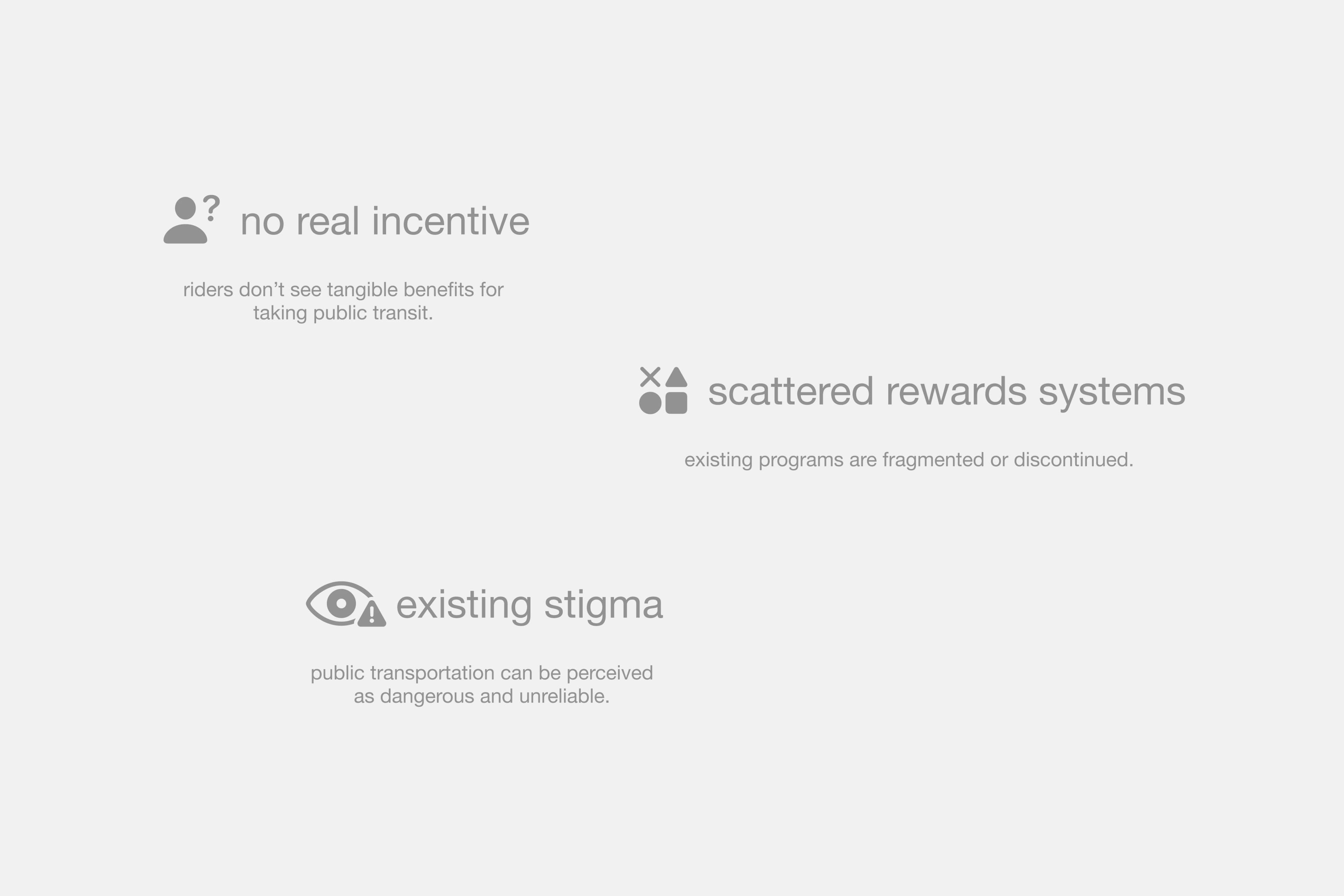
In Seattle, buses and light rail cover much of the city, yet many younger commuters still prefer to drive. While safety, cleanliness, and speed concerns remain, one major barrier is the lack of clear incentive to choose public transit over a car.
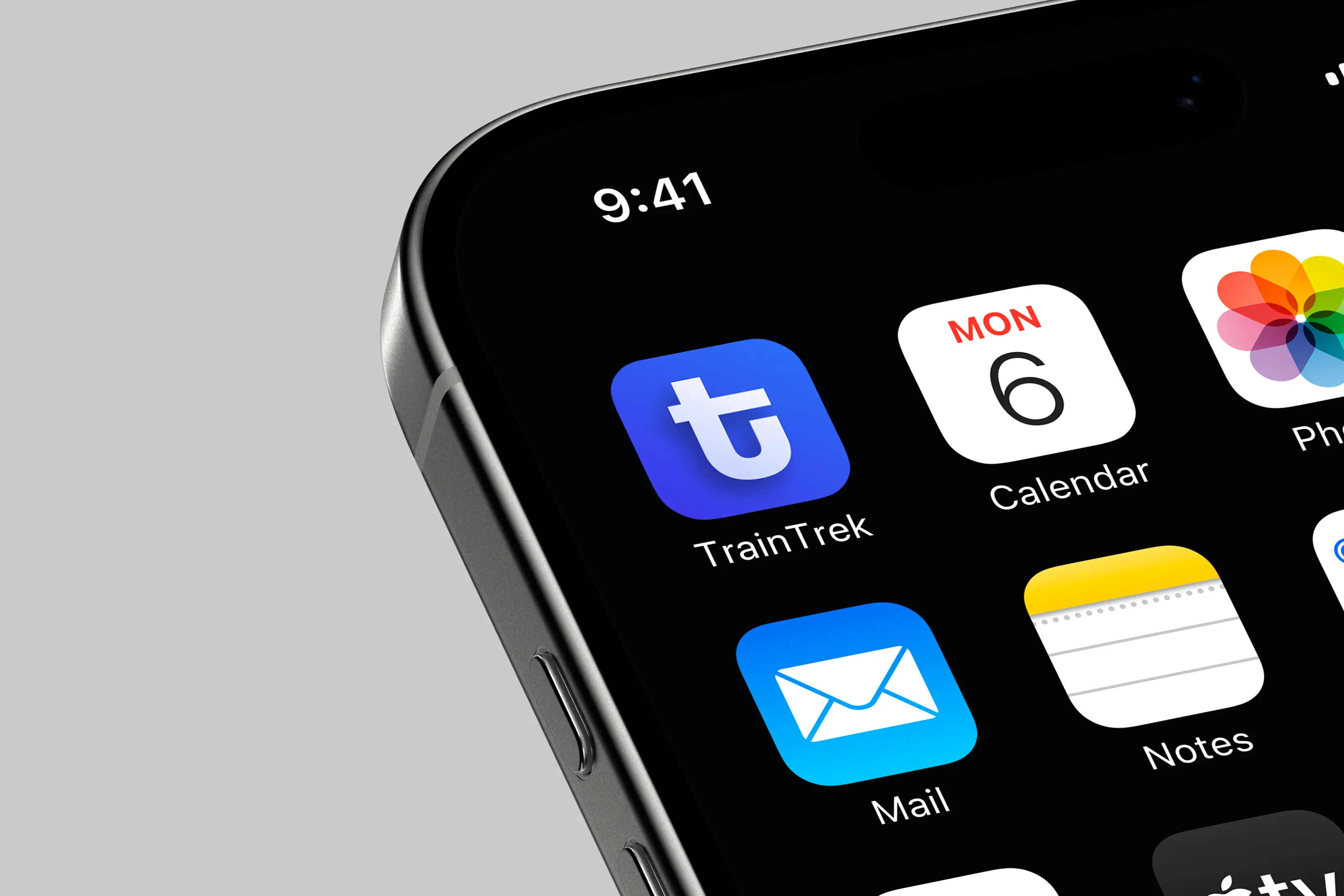
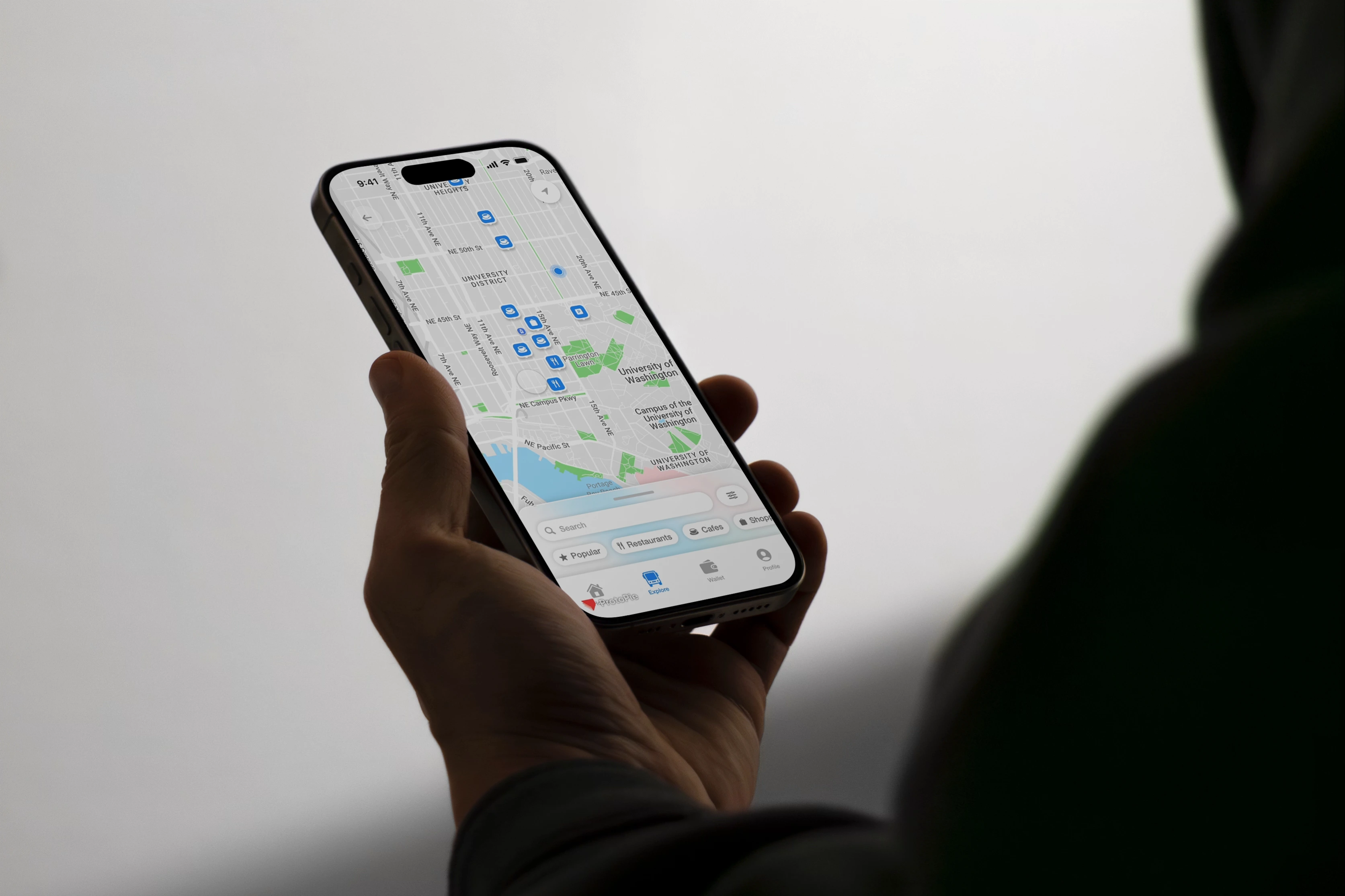
TrainTrek bridges this gap by rewarding riders for their trips. With points earned for every ride, a focused map of participating businesses, and easy QR code redemption, TrainTrek turns public transit into a rewarding habit.
CHALLENGE
SOLUTION
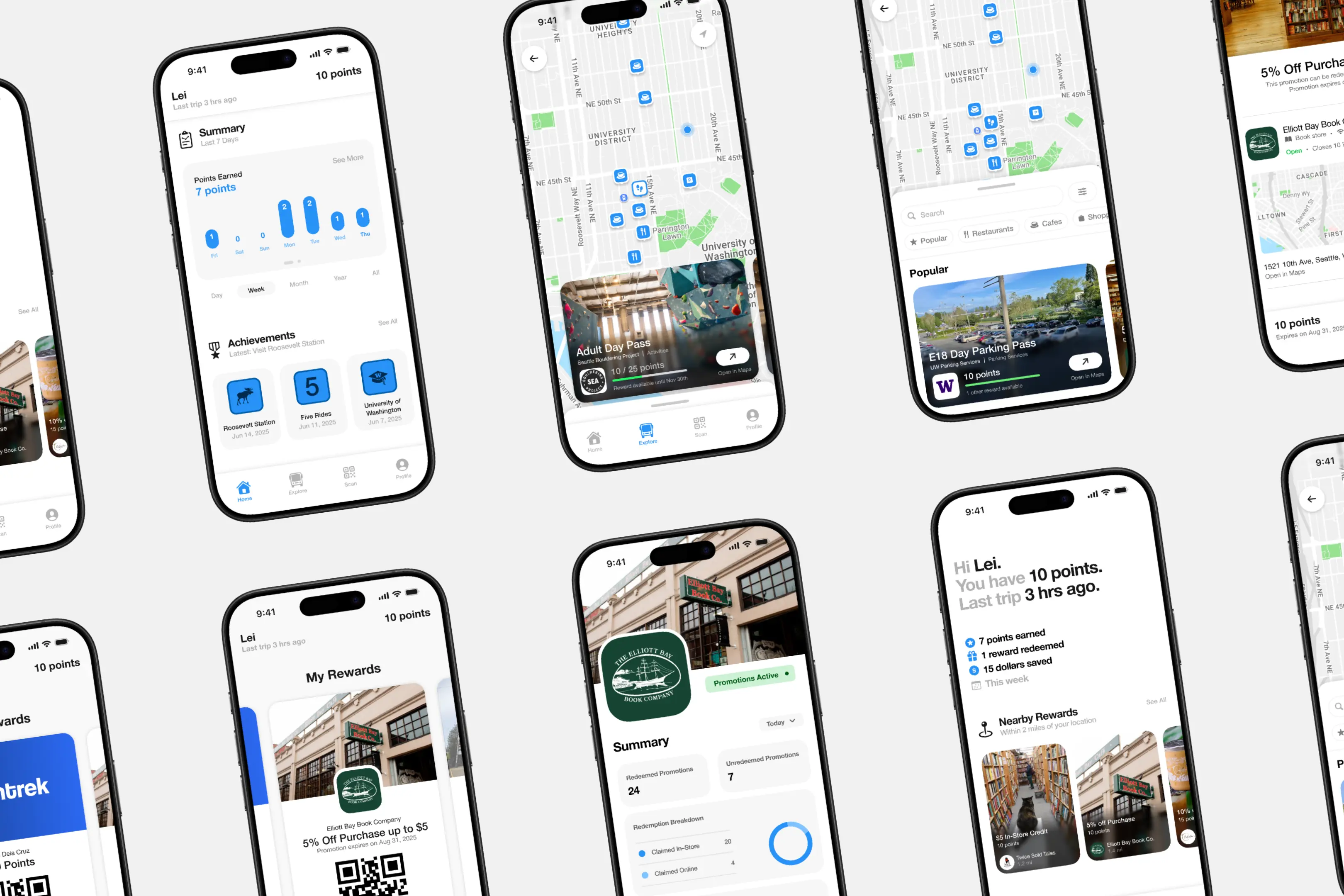
By linking your transit card, you earn points for every ride, then redeem them for discounts at participating local businesses.
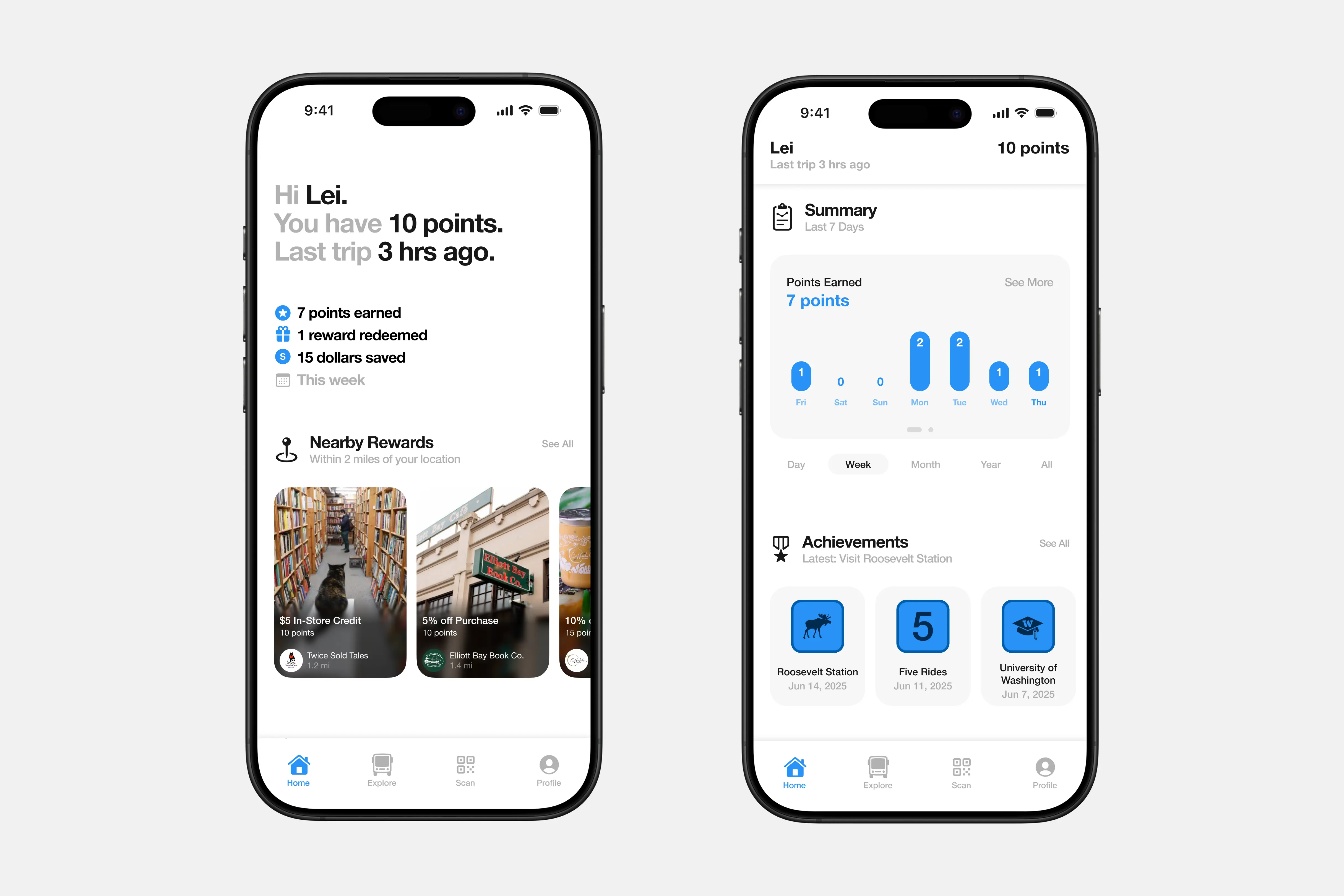
Your commuter dashboard
Overview, nearby rewards, summary, and achievement screens keep commuters updated with their point totals and their progress.
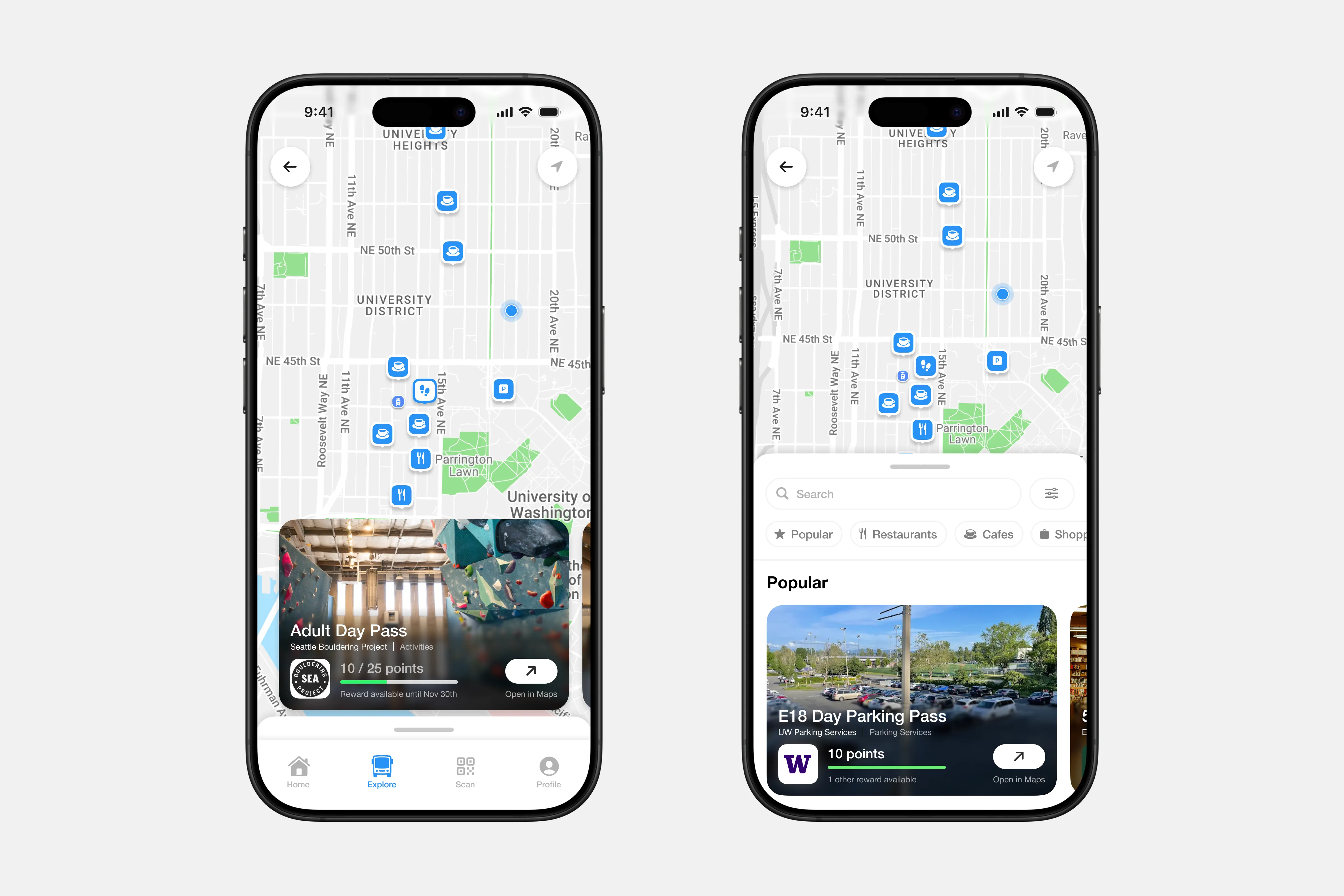
Find participating businesses
Users can browse for participating businesses to use their points at.
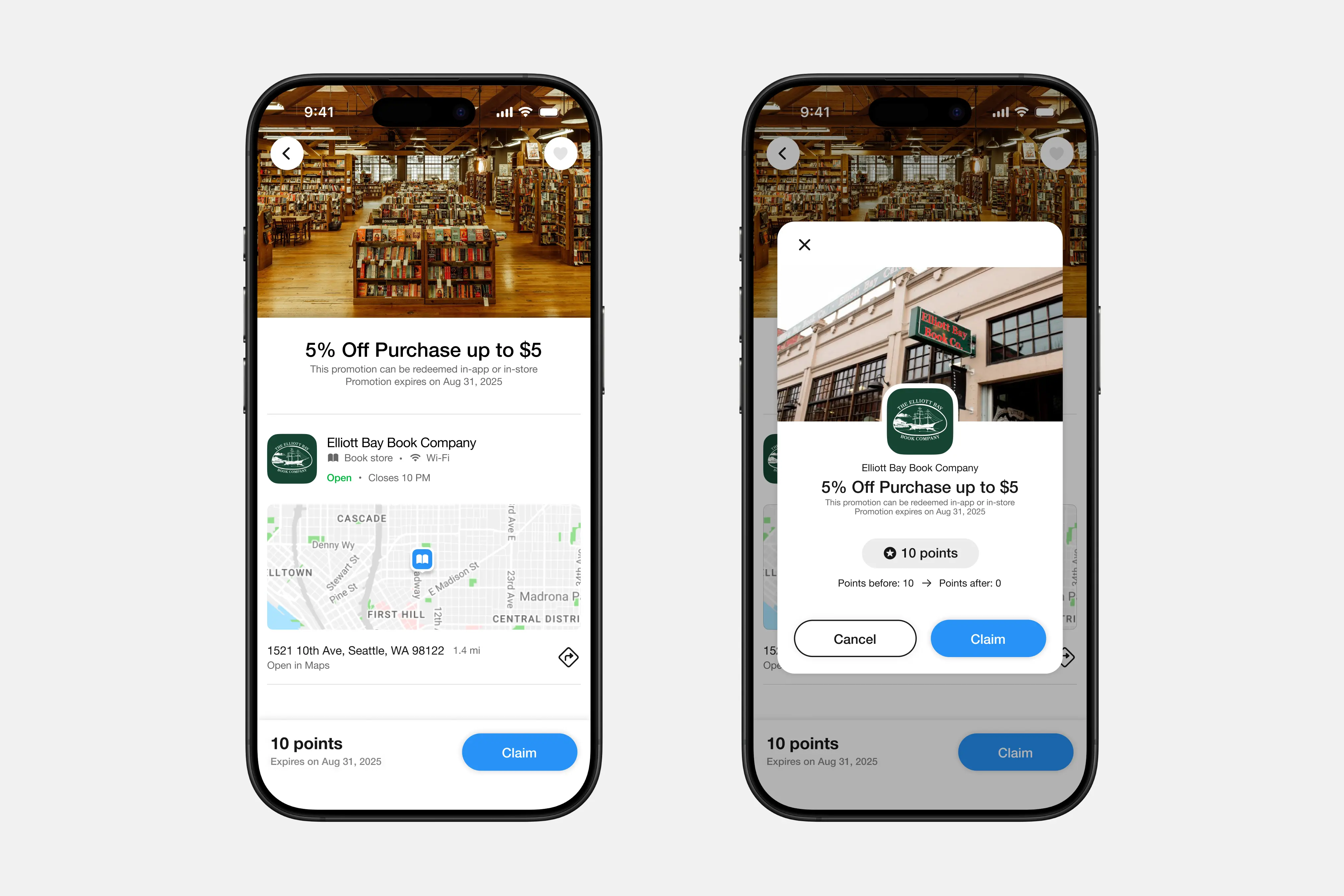
Use points for rewards
Promotion details, location, and necessary information are displayed on one easily scannable page.
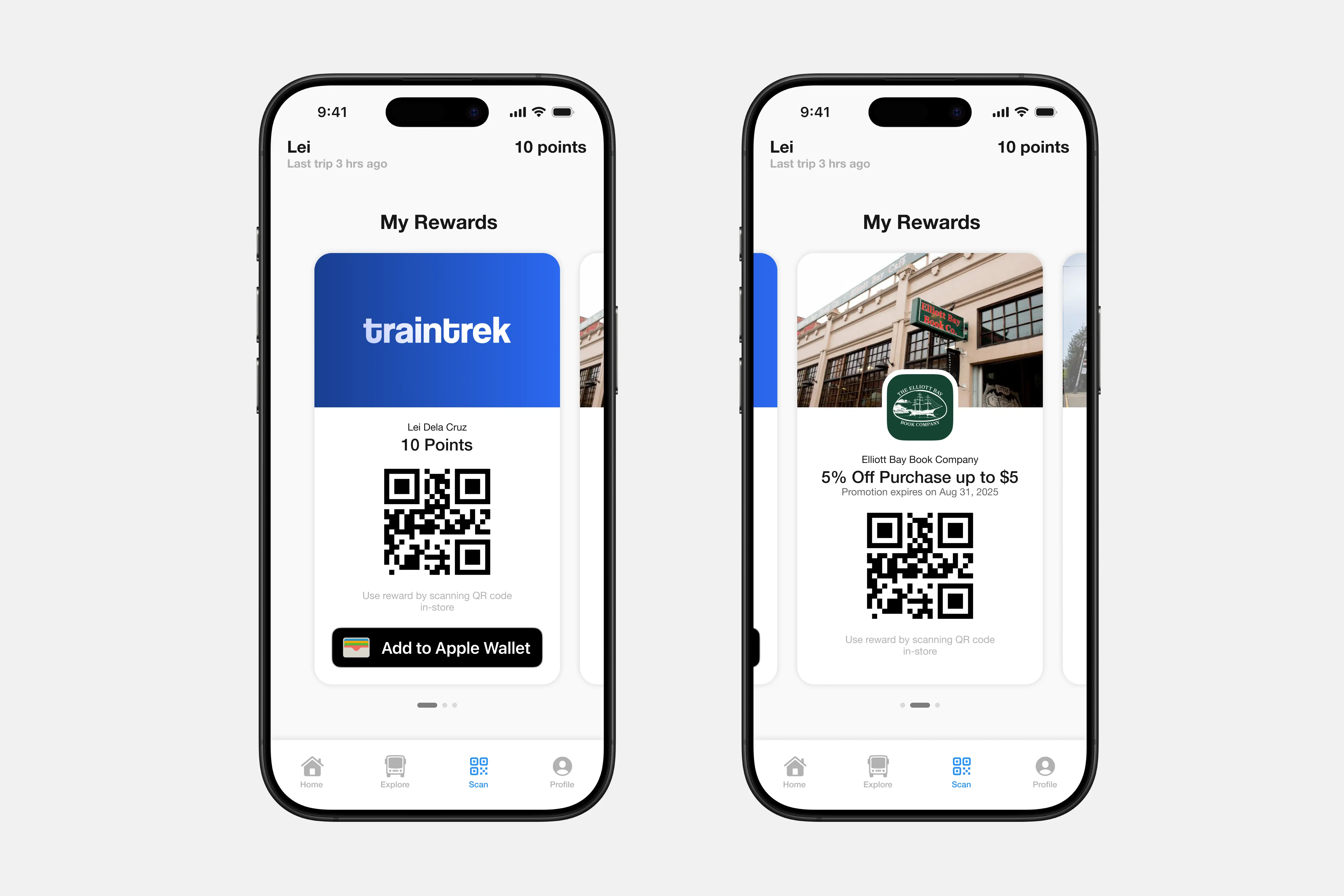
Scan your code in-store to redeem
Claimed promotions can be found in the scan page. Users also have a personal wallet, so that commuters can use their points in person without needing to redeem a promotion in the app.
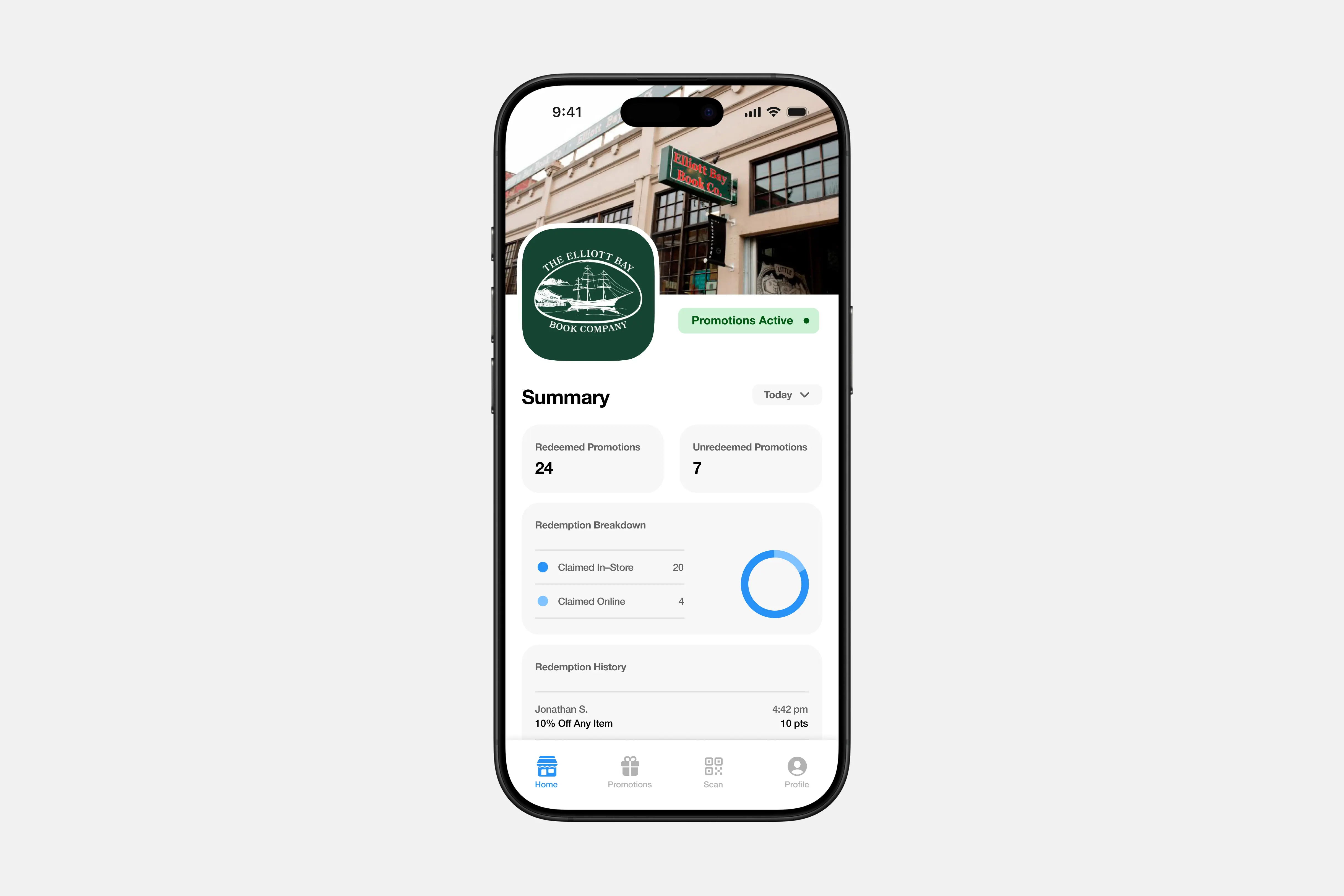
Easy for businesses to participate
Businesses are provided with a summary of their promotion details and general information about their store.
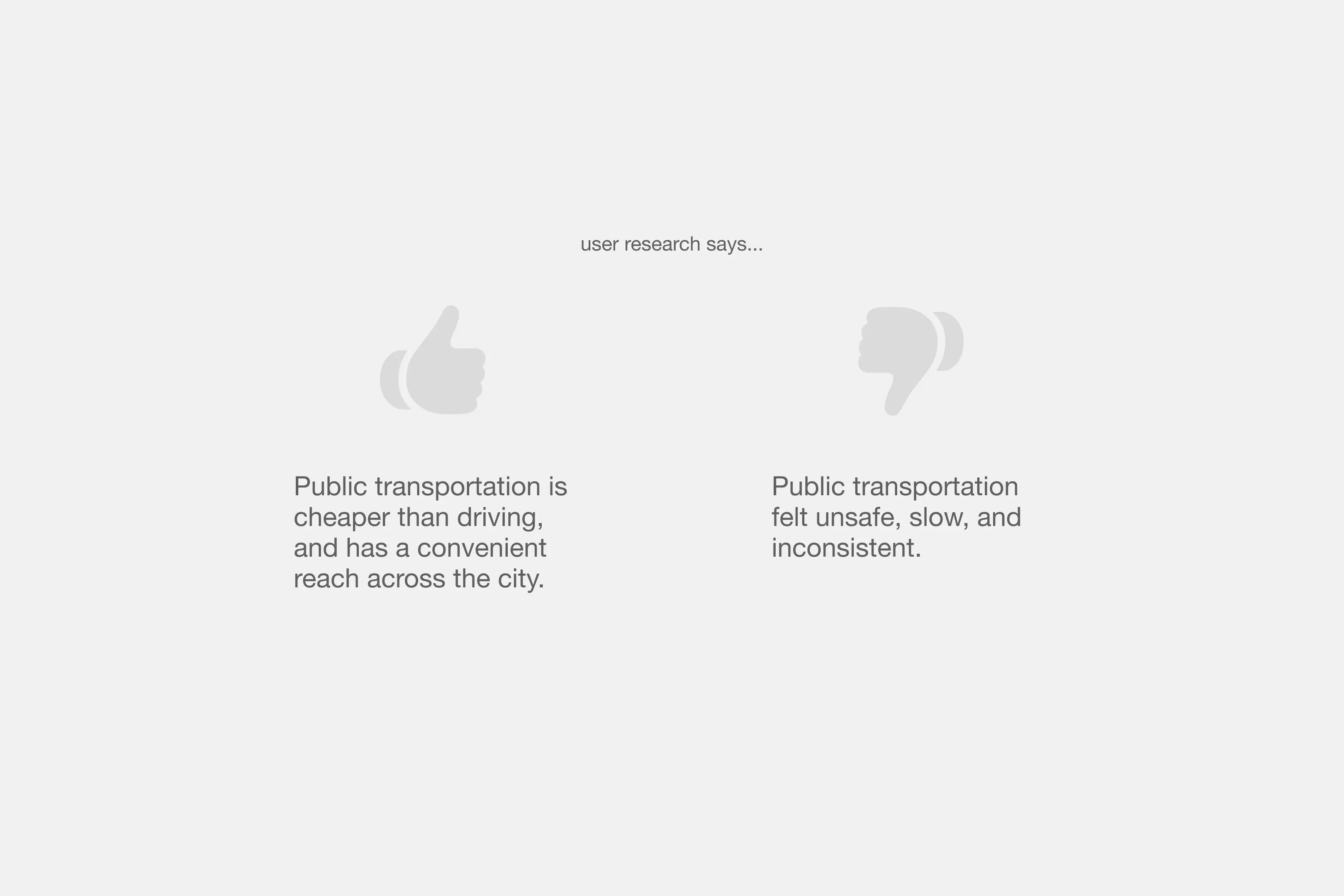
USER RESEARCH
Through surveys and short 30 minute interviews, we uncovered key perceptions and insights:
COMPETITIVE ANALYSIS
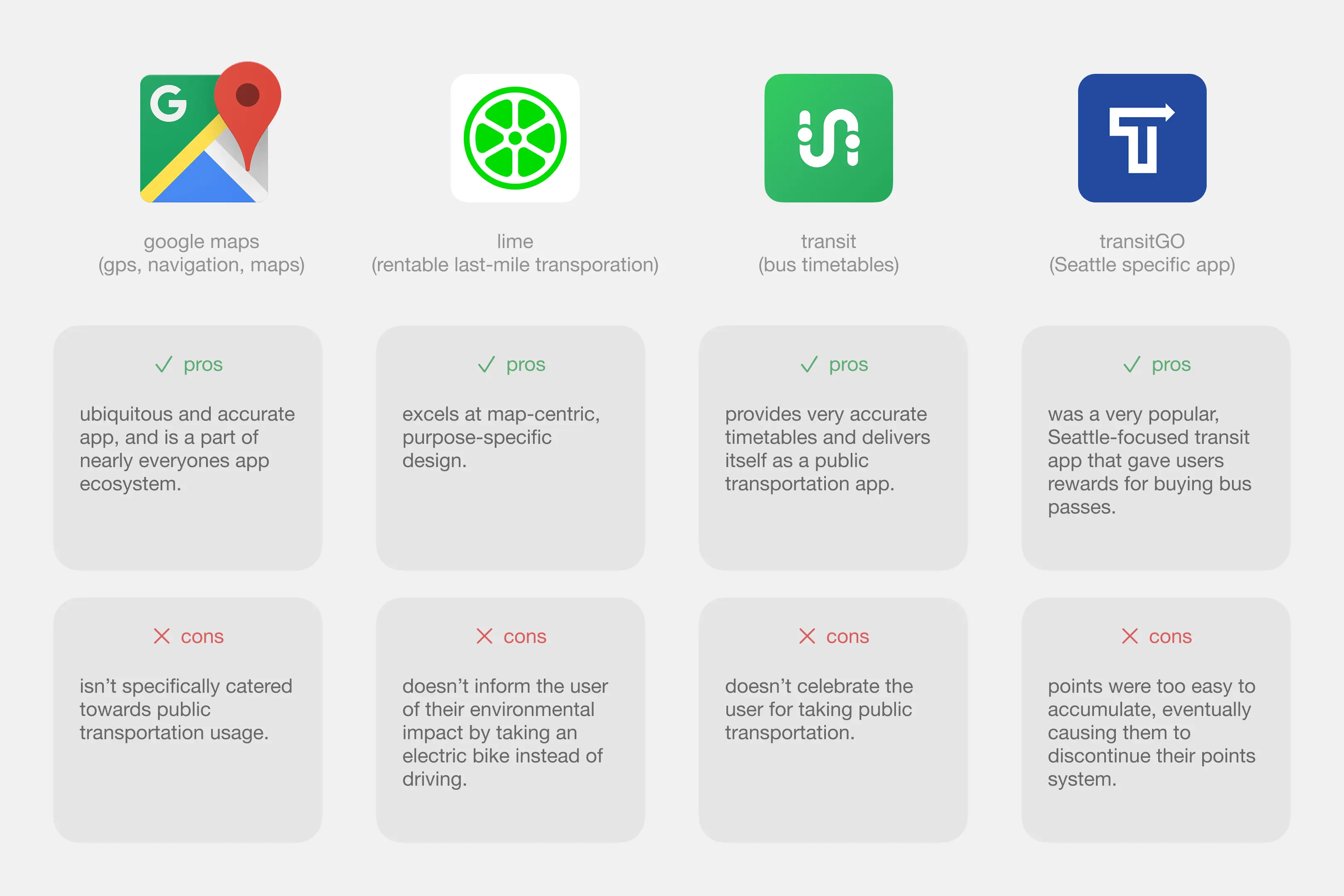
Through competitor analysis, we focused on how these apps promote transportation usage and include an interactive map.
INSIGHT
During our user research, we also found that many people, specifically students, haven't ventured much outside of campus throughout the several years they have been in college.
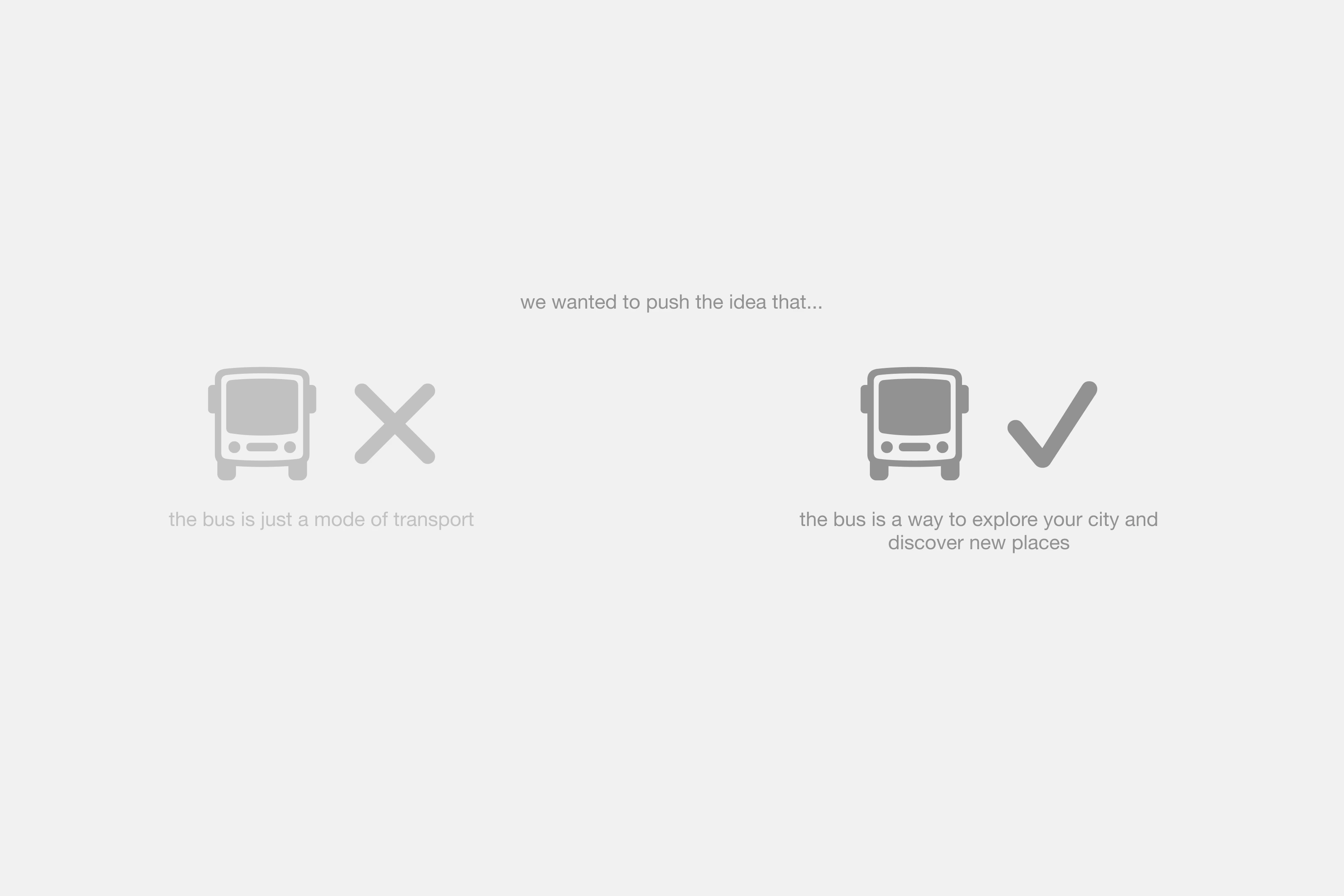
We wanted to improve public transportation ridership by invoking behavioral changes — that the bus wasn't just a mode of transport but a way to explore your city.
CHALLENGES
Design process overview and key milestones
HOW MIGHT WE...
IDEATION
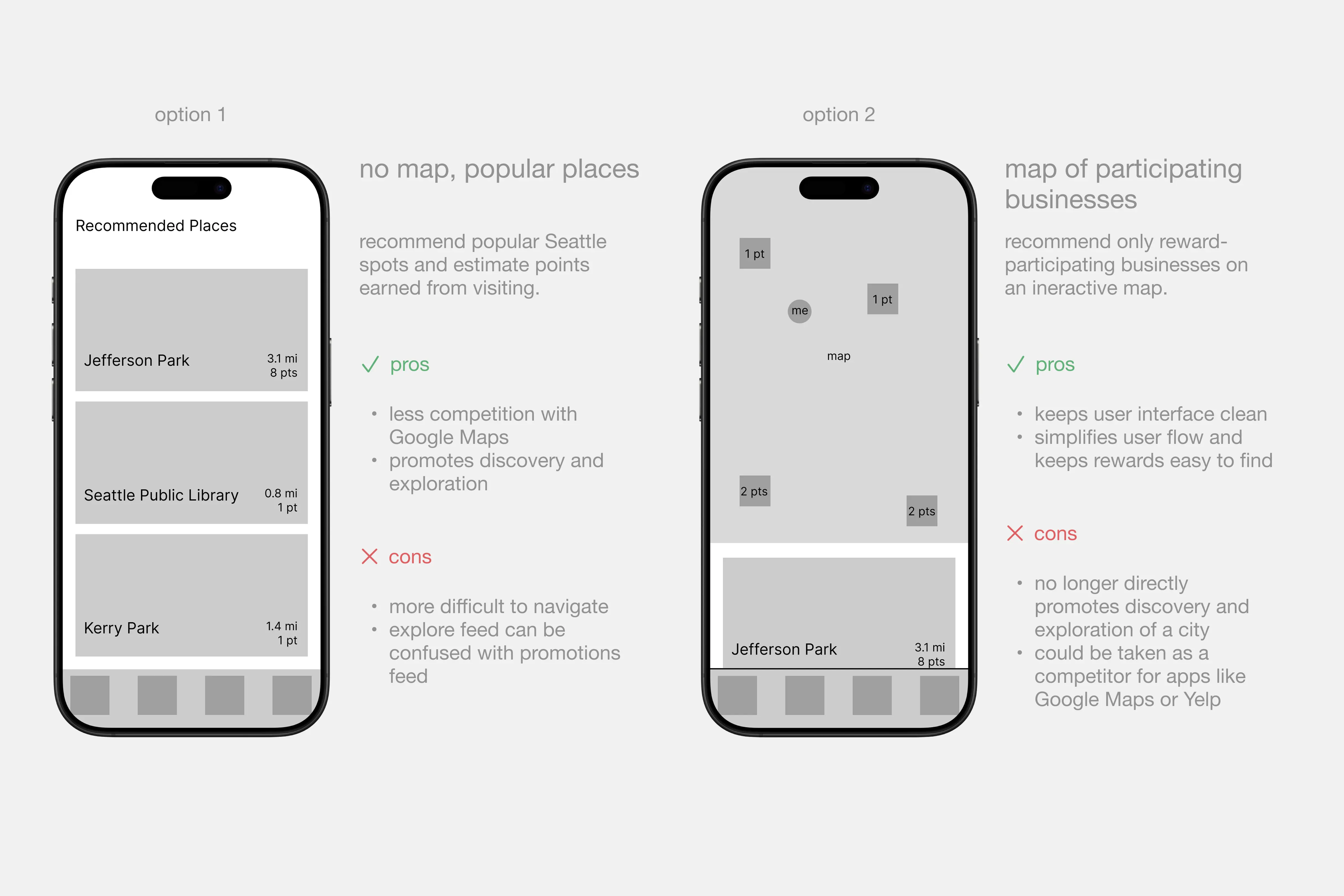
We considered two ways to implement our idea. The first focused on promoting the discovery of a city, and the second focused on promoting the businesses that would participate with the rewards program.
DESIGN EXPLORATION
We decided to proceed with option 1. Our main concern with option 2 was its potential to be seen as a competitor to large apps such as Google Maps and Yelp, and unless we implemented everything they had and more, we were worried that we'd end up with a less successful product.
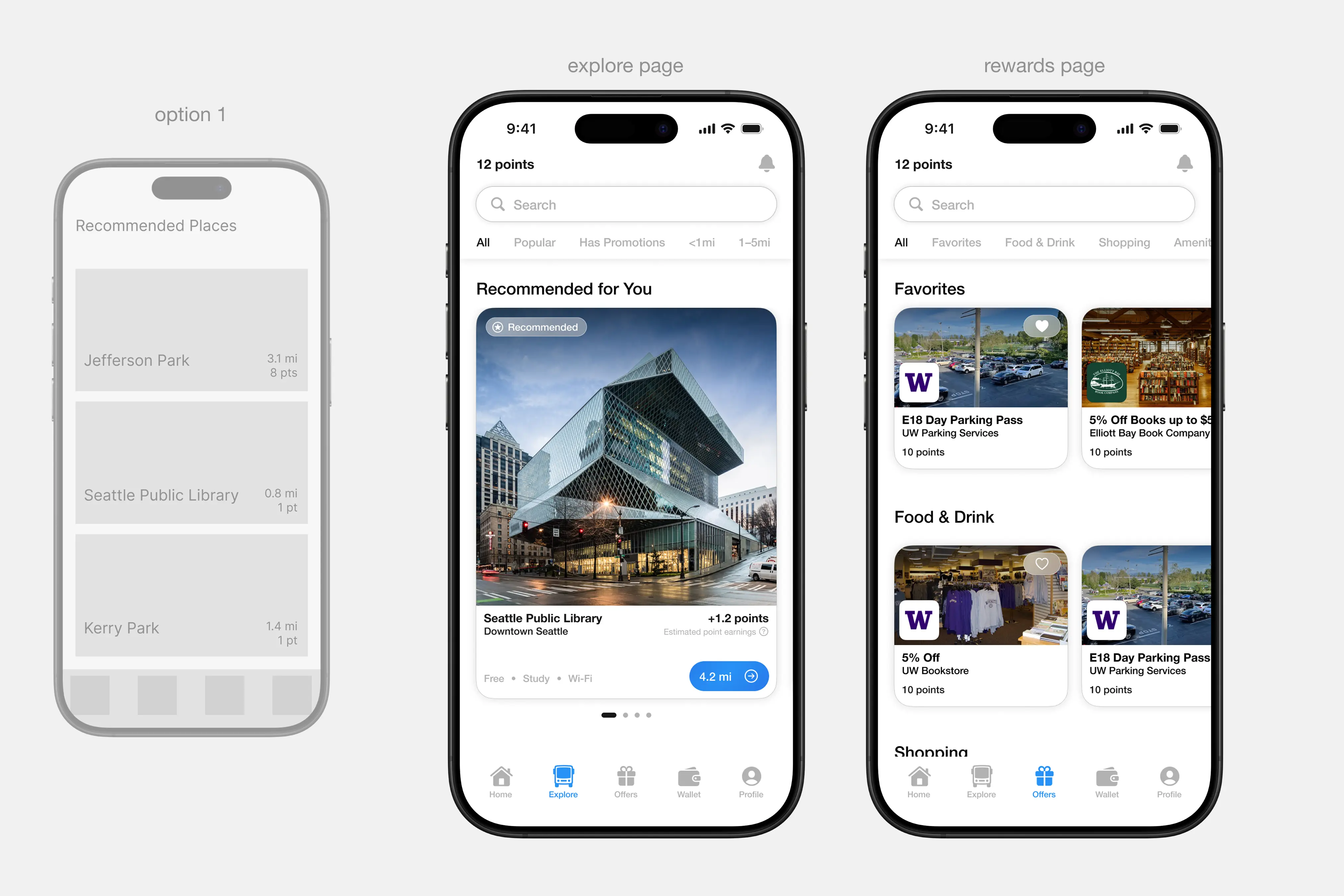
The explore page recommends the user with fun and popular Seattle destinations, and the estimated points earned if visited using transit. The rewards page displays a list of participating businesses offering discounts in exchange for points.
ROADBLOCK
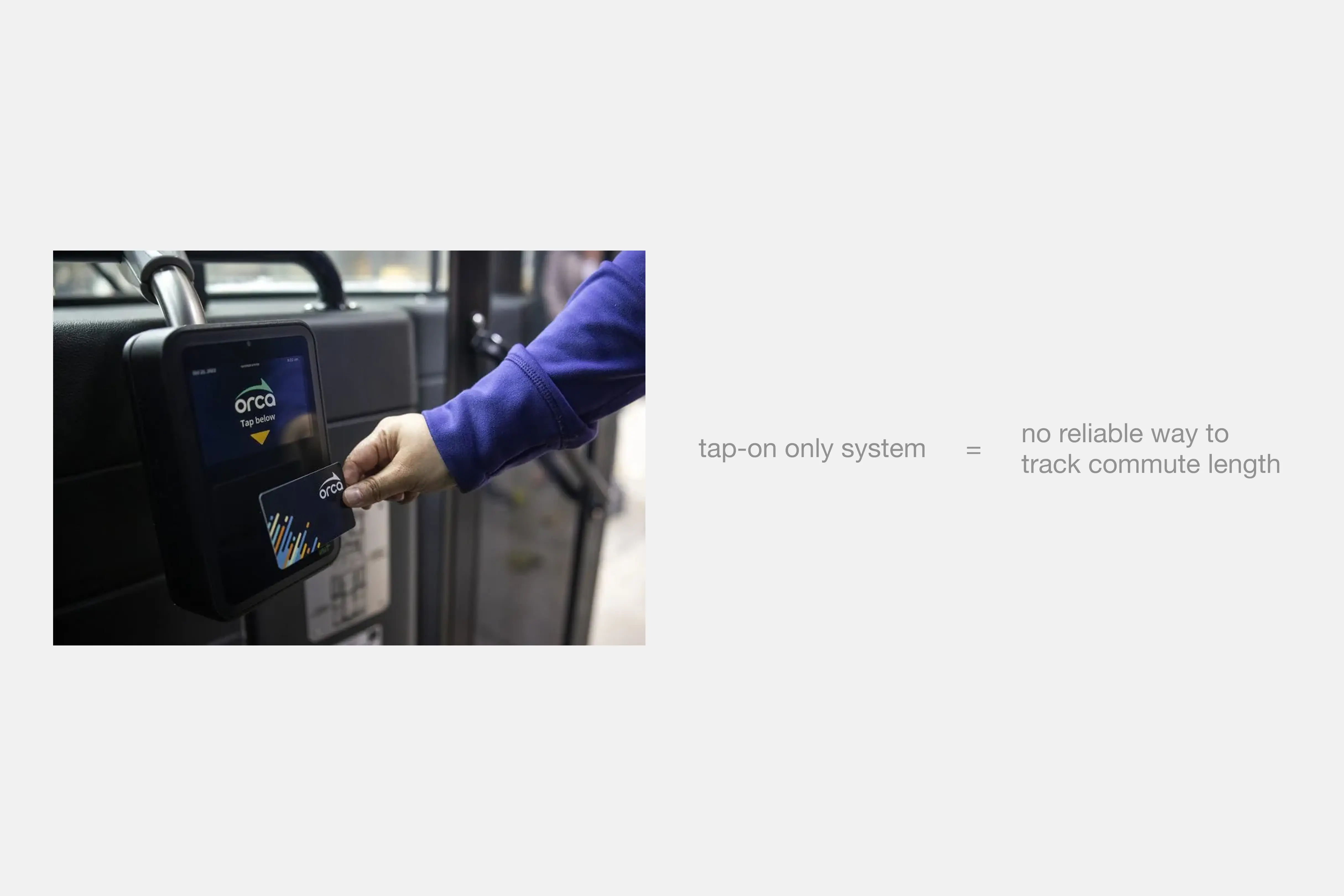
Partway through designing option 1, we realized one fatal flaw with this system. Seattle transit operates on a tap-on only system, meaning that there was no reliable way to keep track of a persons commute length. This meant that points had to be at a certain fixed amount of points per ride, making the explore page lose its value.
PIVOT
Having realized this, I decided to pivot the app to option 2: including a map, but this time refraining from providing details and fully focusing on participating businesses. With this, there were some things to consider when refocusing the final app around option 2:
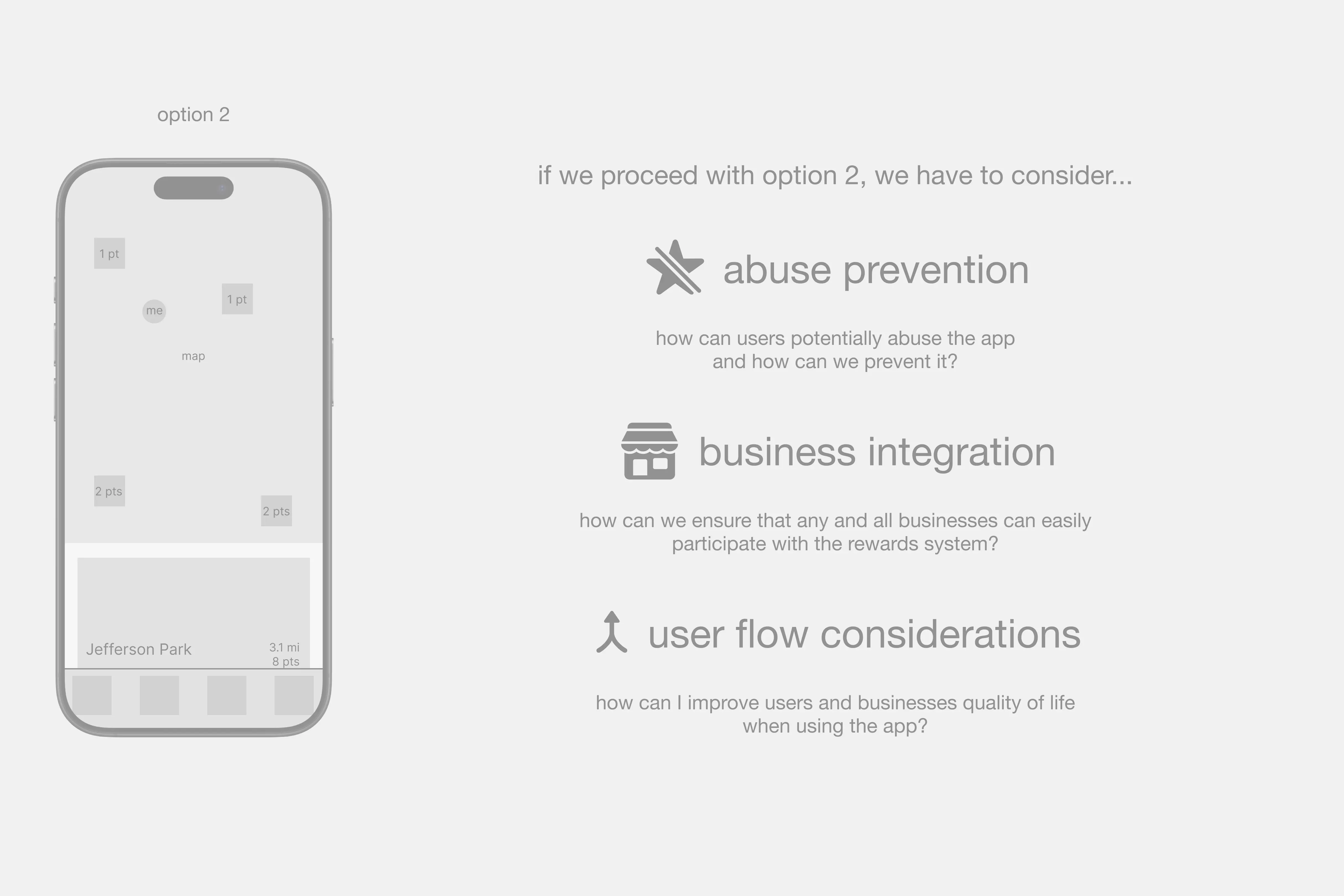
Our key design challenges
FINAL DESIGN
We put riders and businesses to the forefront of public transportation, encouraging the idea that taking public transportation is a habit that should be rewarded and celebrated.
REFLECTION
This experience taught me that product design is not just about designing an experience, but understanding how it can fit into a larger ecosystem. I was constantly challenged to consider all the possible stakeholders of the app, from commuters, to small businesses, to users with malicious intent. I had fun iterating from a city discovery app where transportation was a second thought, to a focused reward system where public transportation was at the forefront.