ROLE
WEB DEVELOPER
GAME DESIGNER
SKILLS
REACT
FIREBASE
HTML/CSS
TEAM
SELF
TIMELINE
SPRING 2025
1 WEEK
OVERVIEW
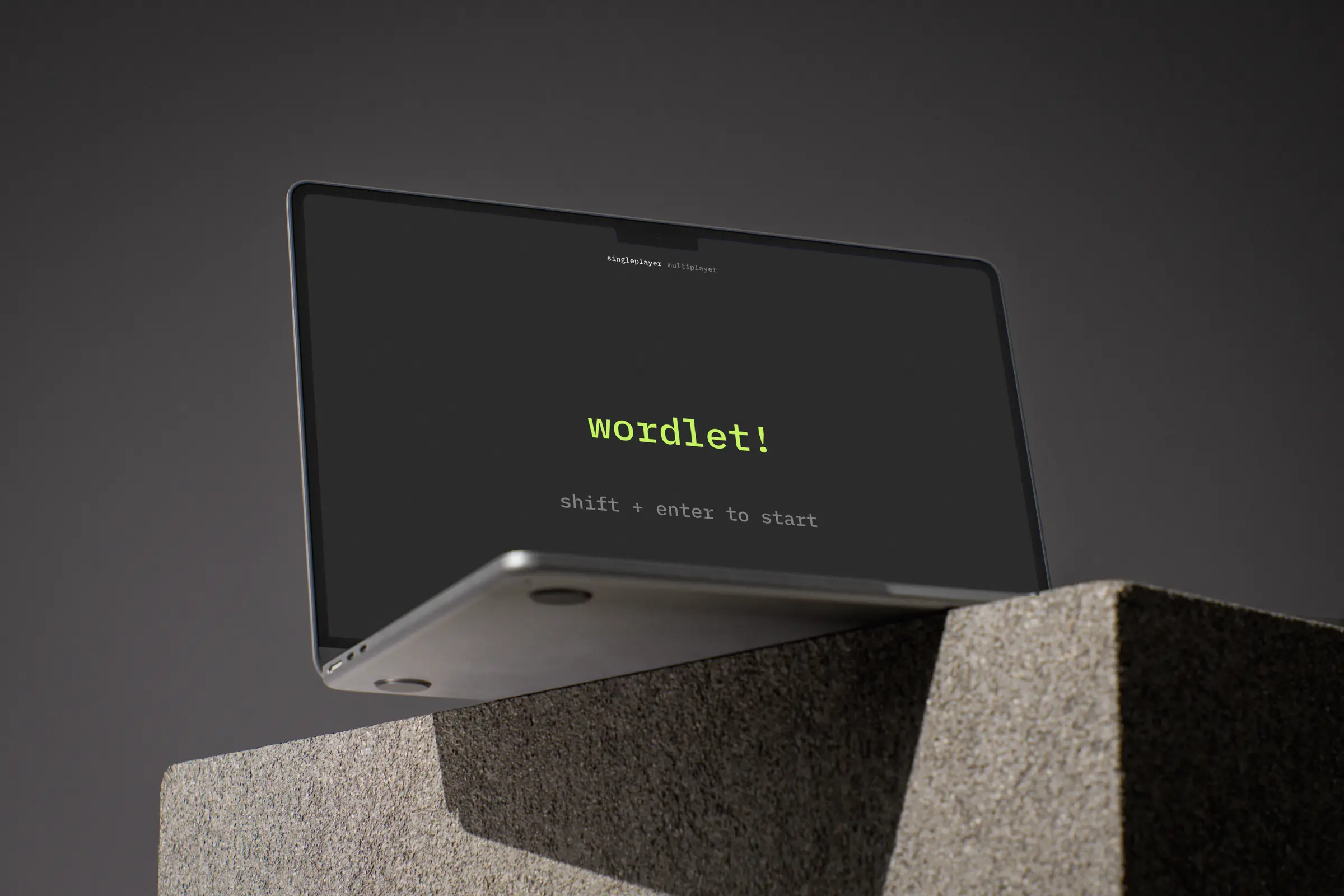
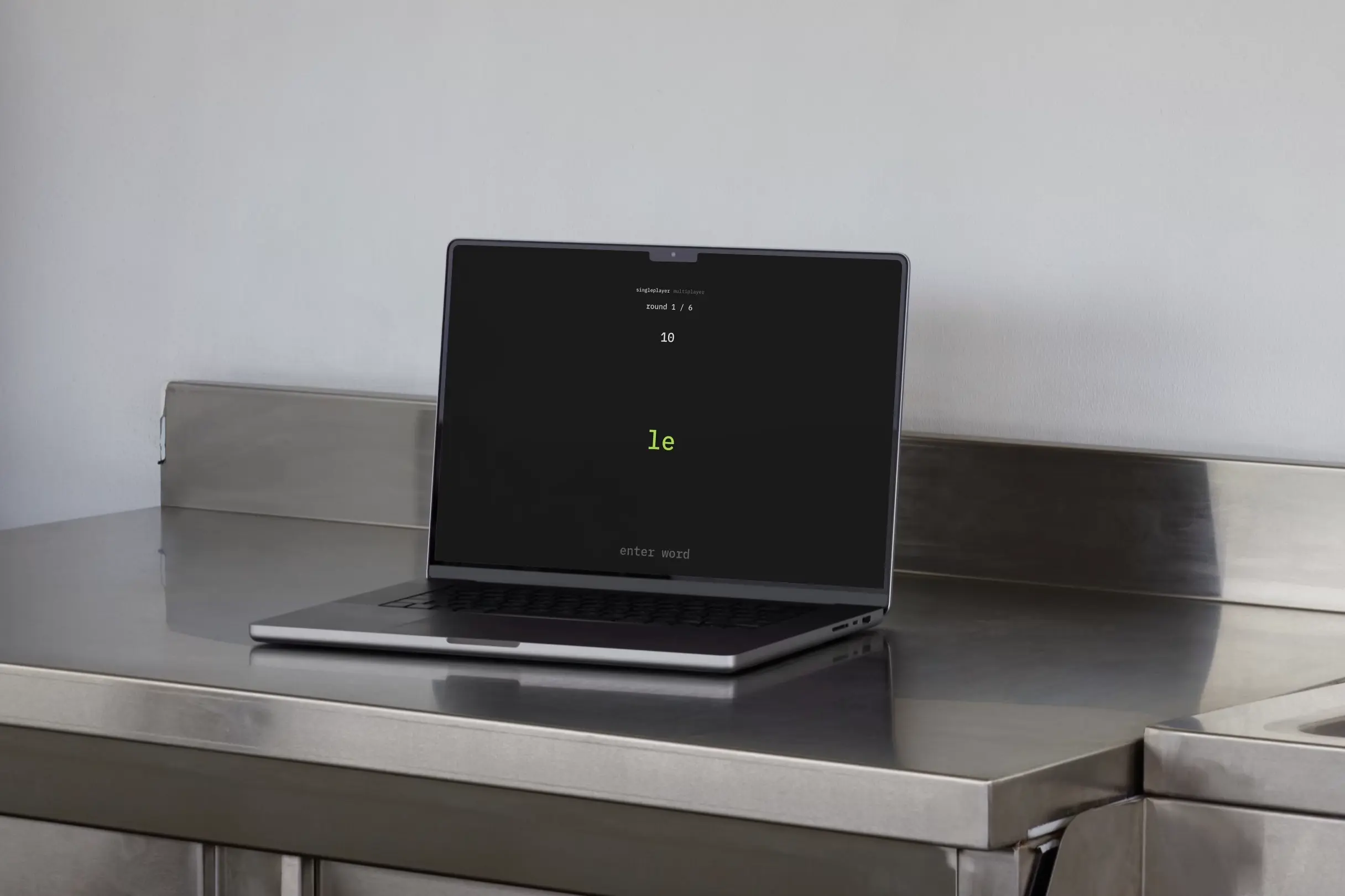
Inspired by games such as Bomb Party and Monkeytype, Wordlet is a word game that challenges players to think quickly and creatively. As the sole developer, I had to tackle creating the game's core mechanics, implementing real-time multiplayer functionality and optimization strategies with Firebase, and designing a clean and engaging visual identity.
Type as many words as possible!
The player is given with a two-letter prompt, must enter as many words as they can that contain the prompt. Prompts rotate every 20 seconds, and players can combo past prompts for extra points.
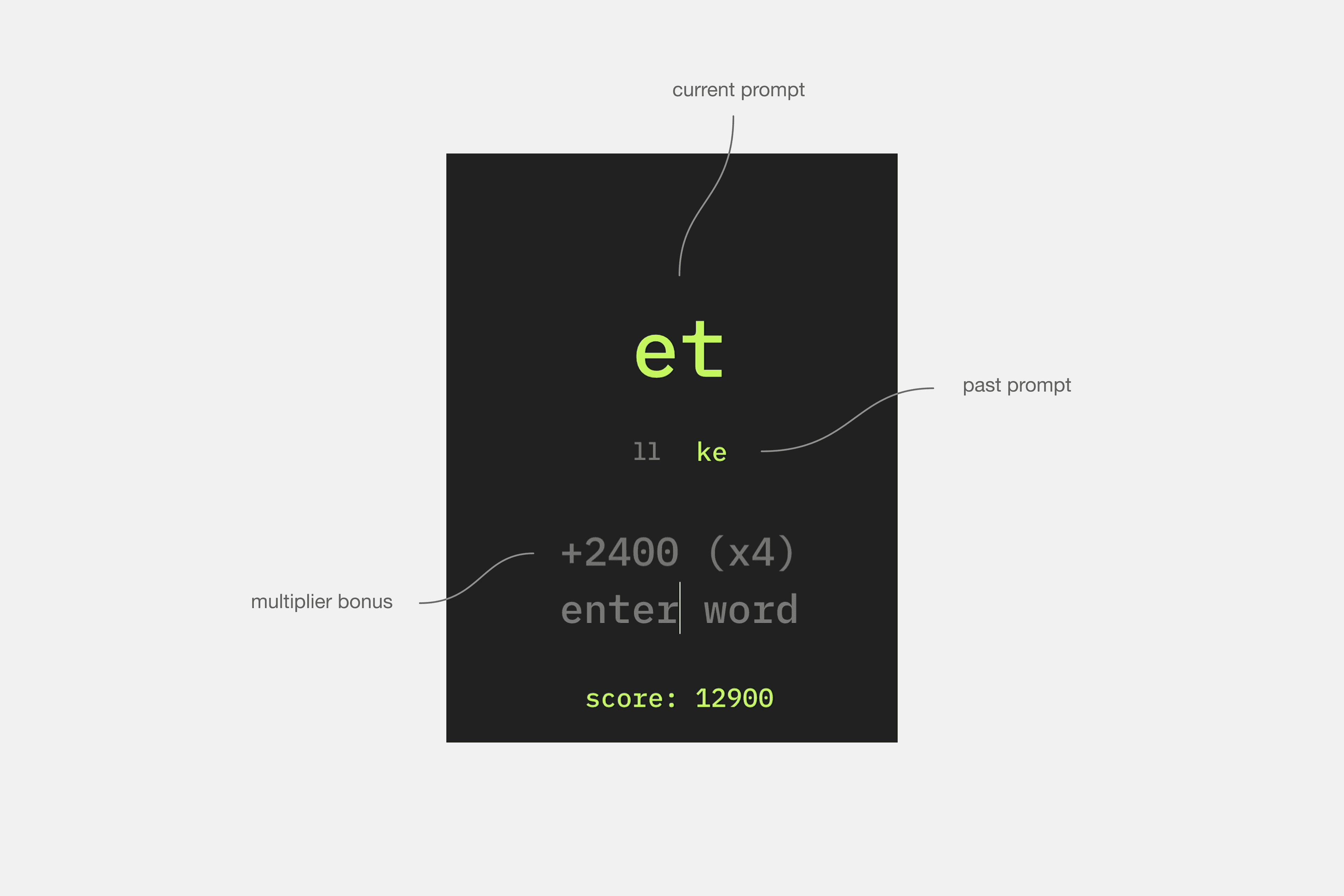
Words that contain previous substring prompts earn bonus points.
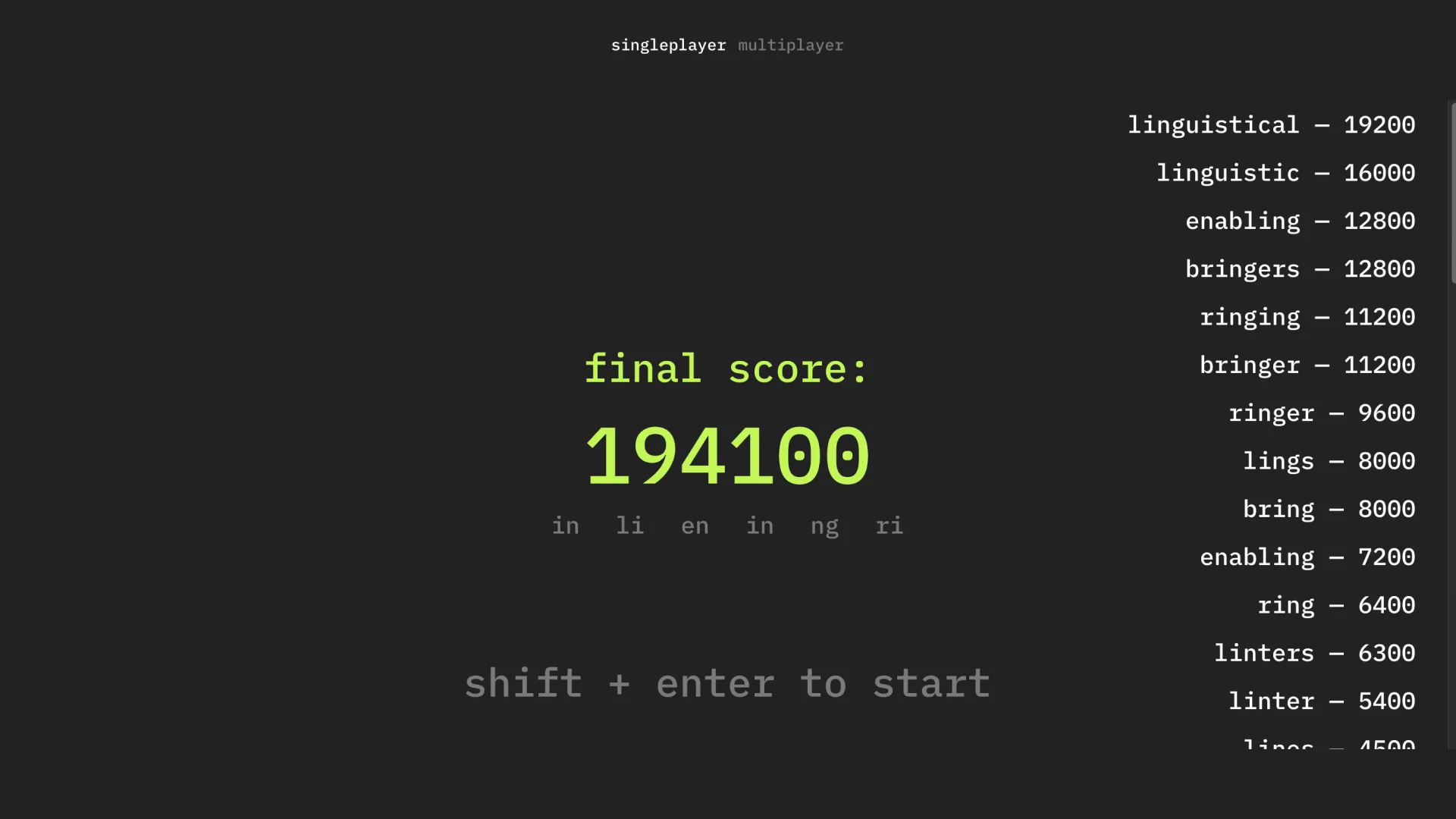
Example final summary screen
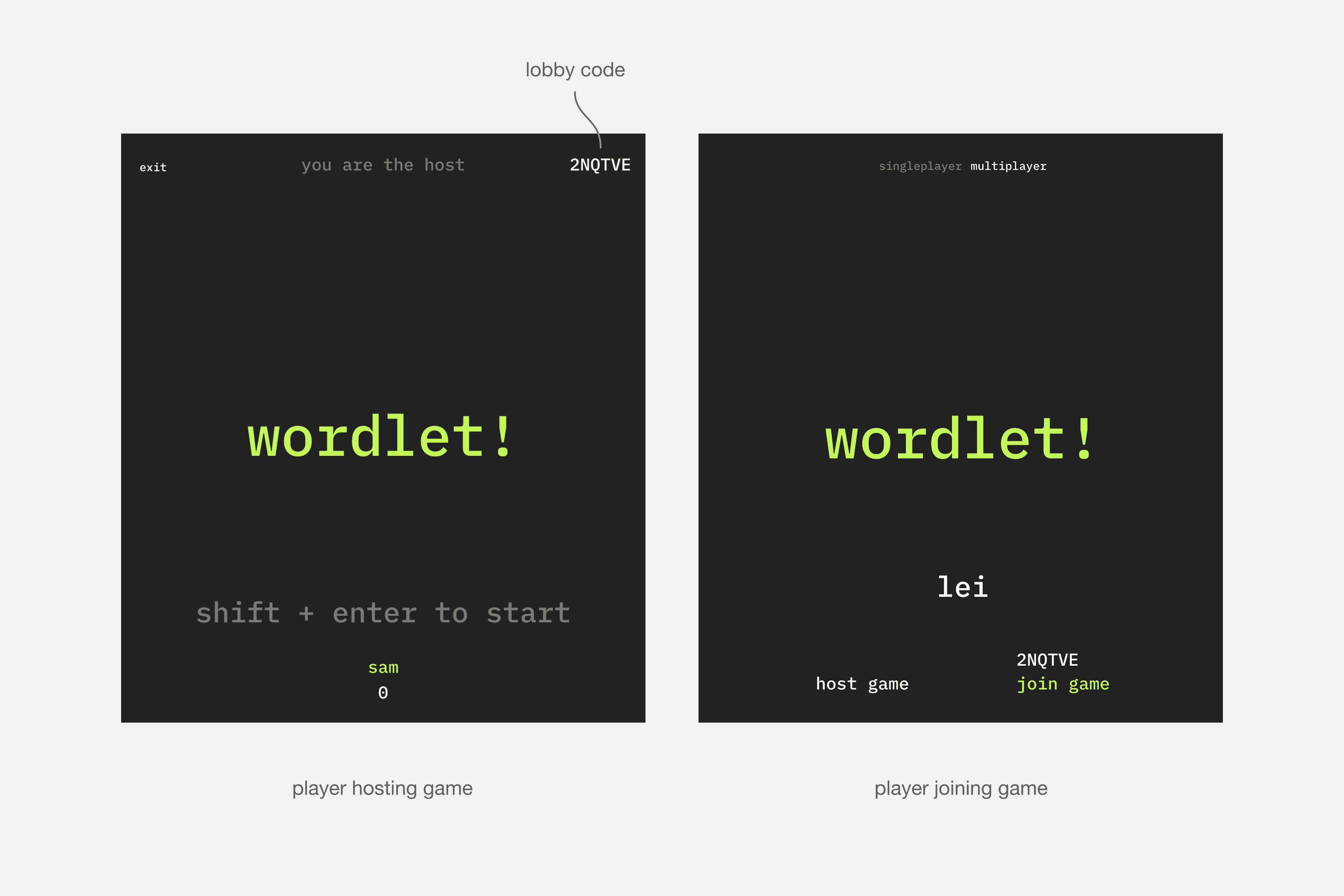
Multiplayer functionality with Firebase
Players can either host a game or join an existing game by entering the lobby code.
CHALLENGE
Since the game only accepts valid English words, I needed a way to verify user input. My initial approach was to include a 43MB file of the English dictionary directly in the application, but this caused every user to download the full file on each visit—resulting in heavy resource usage.
To reduce the download size, I moved the dictionary to Firebase and implemented a system that loads only the necessary portions of the file as the game progresses. This significantly reduced the app’s initial download size and ultimately allowed me to support twice as many concurrent players with a free Firebase plan.
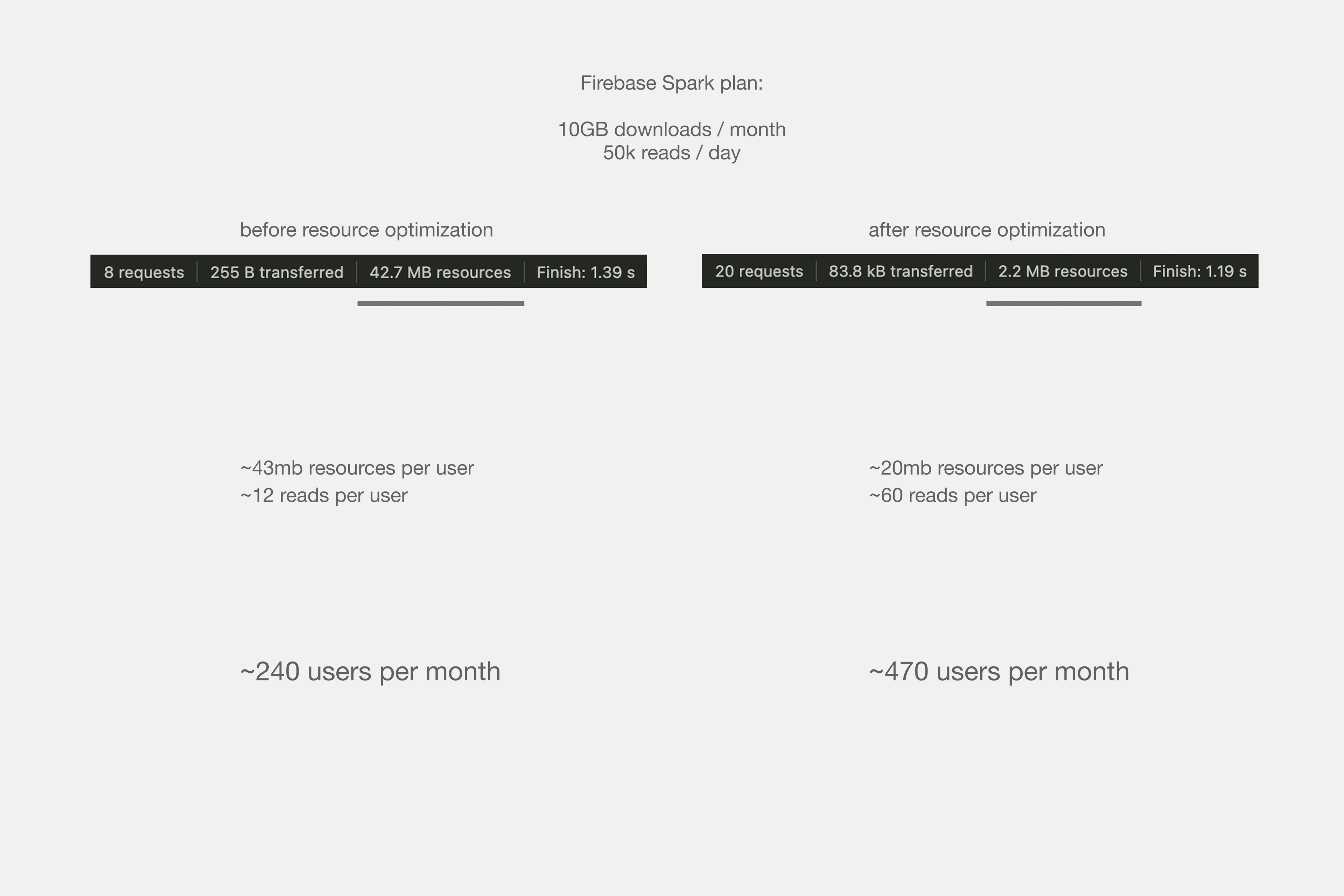
By optimizing the way users loaded in the dictionary file, my game was able to double the max number of players it can support under Firebase's free hosting plan.
REFLECTION
Working on this project gave me a deeper understanding of how design decisions directly impacts the performance and costs of a product. Being both a UI / UX designer and a developer revealed to me how impactful the front-end experience is to technical scalability, and the challenges I faced while trying to optimize wordlet! showed me how the UI and user flow of an app greatly determines the operational costs and resources the app needs to function.
This experience taught me that thoughtful, intentional design goes beyond just aesthetics or usability, but that good design also means creating sustainable and efficient products.